
1.5-Ton All-Electric Pallet Truck Travel Range
Learn why a 1.5-ton all-electric pallet truck loses travel range, how to diagnose it, and how to use a practical pre-shift checklist.
Updated:
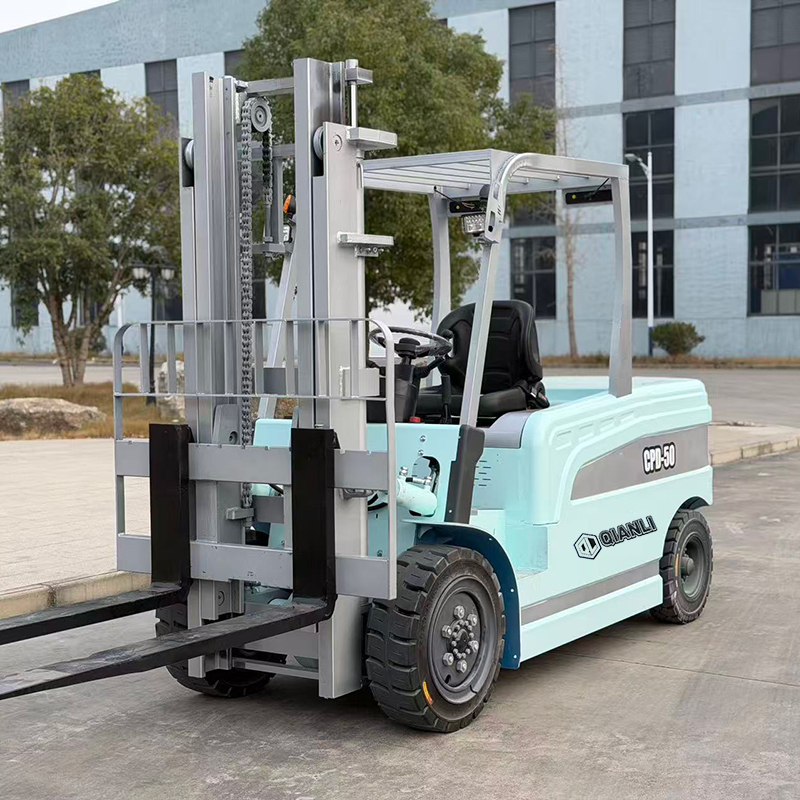
When a 1.5-ton all-electric pallet truck travels less distance than expected, the battery is not always the only cause. The result may come from charging condition, payload distribution, operating speed, floor resistance, slopes, wheel condition, or an unsuitable operating pattern. For overseas importers and procurement managers, the key is to separate a temporary operating issue from a configuration issue before replacing major components.
This guide uses the QLD-15 Standing as the reference product and provides a practical method for diagnosing reduced travel range. It also explains how to compare application requirements with the truck configuration and how to complete a pre-shift inspection before the machine enters service.
What Travel Range Really Tells You
Travel range should be evaluated as an operating result rather than as a battery label alone. A truck may show a full battery at the beginning of a shift and still deliver a shorter working distance if the load profile, route, floor condition, acceleration pattern, or charging process differs from the normal application.
The QLD-15 Standing is a 1.5-ton full-electric pallet truck with a rated capacity of 1500 kg and a lift height of 205 mm.
Its battery specification is 24 V with a capacity of 120 Ah or 130 Ah, so the procurement team should confirm which battery configuration is required before comparing expected operating performance.
A useful investigation begins with three questions:
- Is the available battery energy lower than expected because of charging, battery condition, or a connection problem?
- Is the truck working harder because of payload, load centre, slopes, floor resistance, or frequent stopping?
- Is the selected truck configuration suitable for the route, handling frequency, and warehouse layout?
Recording the answers by shift creates a more reliable basis for supplier communication than simply reporting that the battery does not last long.
Common Causes of Reduced Travel Range
Battery state and charging condition
A battery indicator is useful for daily operation, but it should not be the only diagnostic reference. Ask the operator whether the truck reaches the expected charging condition, whether the charger completes its normal cycle, and whether the battery connector is clean and firmly seated.
For the QLD-15 Standing, the applicable battery voltage is 24 V and the listed capacity is 120 Ah or 130 Ah. If the actual battery fitted to the truck does not match the approved configuration, the operating result may not match the intended specification.
Before replacing the battery, check the charger, connector, cable condition, visible battery damage, and the charging record. A procurement team should also verify whether the truck is being charged according to the agreed operating procedure rather than being returned to service after an incomplete charge.
Payload and load centre
Payload affects the effort required from the drive system. The QLD-15 Standing has a rated capacity of 1500 kg and a listed load centre of 600 mm.
When the load is heavier than the rated capacity or positioned farther from the specified load centre, the truck is being used outside the stated rating. Even when the load is within the weight limit, poor pallet positioning can increase the effort required during acceleration, turning, or movement on an incline.
During troubleshooting, record the typical payload, the heaviest payload, pallet condition, and the position of the load on the forks. Confirm that the load is stable and close to the intended fork position before judging battery performance.
Travel speed and stop-start operation
The QLD-15 Standing lists a travel speed of 4.5 km/h when laden and 6.2 km/h when unladen.
Repeated rapid acceleration, abrupt braking, and frequent direction changes can make the same route more demanding than a smooth material-flow pattern. A short route with many stops may therefore require more energy than a longer route with steady movement.
Ask operators to avoid unnecessary acceleration and to plan the route before moving the load. If the truck works in a high-frequency transfer area, compare the number of starts, stops, turns, and loaded trips between a normal shift and a shift with reduced range.
Slopes, floor resistance, and wheels
The QLD-15 Standing lists gradeability of 5 percent when laden and 12 percent when unladen.
Regular movement on ramps, uneven surfaces, damaged floors, thresholds, or areas with high rolling resistance can increase traction demand. The same truck may therefore show different travel results in a flat warehouse, a loading area, and a mixed indoor route.
The specified front wheel dimensions are 250 × 80 mm, and the rear wheel dimensions are 80 × 70 mm. Use these specifications as a reference when checking whether replacement wheels or parts match the intended configuration.
Inspect the wheels for visible damage, embedded material, abnormal wear, and restricted rotation. Also inspect the route for floor debris, pallet fragments, oil, water, and damaged joints. Correcting the working environment may be more effective than changing the battery.
Configuration, layout, and handling pattern
The QLD-15 Standing has an operating weight of 540 kg, a width of 805 mm, a length of 1780 mm, and a minimum turning radius of 1482 mm.
These dimensions should be compared with aisle width, turning points, dock approaches, and the clearance around storage locations. If the truck requires repeated repositioning because the working area is tight, the operating cycle may become more demanding than planned.
The truck has a minimum ground clearance of 40 mm and an overall fork width of 550 mm. Confirm that the floor, pallet openings, and handling lanes are suitable for these dimensions before approving the truck for a new site.
Diagnostic Method: From Symptom to Root Cause
Use a controlled comparison instead of changing several variables at the same time. Start with a fully charged truck, the same operator where possible, a representative load, and a known route. Record the starting battery indication, loaded and unloaded movements, slope sections, stops, and the point at which the operator reports reduced performance.
- Confirm the symptom. Establish whether the problem is shorter distance, slower travel, reduced lifting response, early low-battery indication, or unexpected shutdown. These symptoms may require different checks.
- Check the battery path. Review the charger, connector, cable, charging completion, and visible battery condition. Compare the fitted battery voltage and capacity with the approved product configuration.
- Check the work pattern. Record payload, load position, route surface, slope use, travel speed, stop-start frequency, and turning frequency.
- Check the mechanical path. Inspect wheels, brakes, steering response, and visible resistance during movement. Do not continue operating if the truck behaves abnormally or if a safety-related fault is suspected.
- Compare with the application. If the truck is used for more intensive movement than originally planned, review whether the capacity, battery configuration, travel motor, and operating layout are suitable.
The QLD-15 Standing is specified with a 1.5 kW travel motor and a 2.2 kW lift motor. The travel motor specification should be considered together with the load profile and route rather than evaluated separately from the battery.
| Observation | What to check first | Recommended action |
|---|---|---|
| Early low-battery indication | Charging completion, connector, battery configuration | Verify the charging process and confirm the fitted battery specification |
| Range drops on loaded routes | Payload, load centre, slopes, acceleration | Record the loaded cycle and compare it with the rated application |
| Range drops on one route only | Floor condition, thresholds, debris, turning points | Inspect the route and remove avoidable resistance |
| Travel feels restricted | Wheels, brakes, steering, visible interference | Stop and arrange a technical inspection before continued use |
| Performance differs between trucks | Battery configuration, maintenance record, operating pattern | Compare the trucks using the same route and payload conditions |
Solutions and Product Selection Steps
Match the truck to the application
Begin with the actual task rather than the nominal capacity. Confirm the maximum payload, typical payload, load centre, pallet type, aisle width, floor condition, slope use, travel distance, and shift pattern.
For the QLD-15 Standing, the rated capacity is 1500 kg and the load centre is 600 mm. Use these values as a starting point for application review, not as a reason to operate beyond the specified rating.
Confirm battery and motor configuration
The QLD-15 Standing uses a 24 V battery configuration with a listed capacity of 120 Ah or 130 Ah. Ask the factory to confirm the intended battery option, charger matching, connector arrangement, and service procedure for the target market and operating environment.
The travel motor is specified at 1.5 kW and the lift motor at 2.2 kW. A selection review should consider these specifications alongside the route, payload, slope, and handling frequency.
Check dimensions before ordering
Confirm the truck length of 1780 mm, width of 805 mm, minimum turning radius of 1482 mm, minimum ground clearance of 40 mm, and overall fork width of 550 mm against the warehouse layout.
The fork length is 1200 mm and the fork dimensions are 65 × 180 × 1200 mm. Confirm pallet entry, load support, and storage clearance before finalizing the configuration.
Define an operating baseline
Before large-scale purchasing, agree on a simple test method: the same route, a representative payload, a consistent charging process, and a recorded operating cycle. This gives the importer and factory a shared reference when reviewing a range complaint.
Pre-Shift Checklist for Operators and Supervisors
Complete the following checks before each shift and record any abnormal result:
- Battery: Confirm the battery indicator, charging status, connector seating, and visible condition.
- Controls: Test travel controls, direction selection, horn, emergency stop function, and warning indicators according to the site procedure.
- Braking: Check that the truck stops normally and that the brake response is consistent during a controlled test.
- Wheels: Inspect the front and rear wheels for damage, unusual wear, embedded debris, or restricted rotation.
- Forks: Check the 1200 mm fork length and the fork structure for visible damage, deformation, or obstruction before handling a load.
- Load: Confirm that the payload is stable, centered, and within the working rating for the intended load centre.
- Route: Remove debris and identify ramps, thresholds, wet areas, damaged floors, and tight turning points.
- Record: Note unusual battery behavior, reduced travel response, abnormal noise, repeated stopping, or any visible fault.
Any safety-related abnormality should be reported and assessed before normal operation continues. A checklist is most useful when operators record findings consistently instead of marking every item as acceptable without inspection.
Common Misunderstandings to Avoid
Replacing the battery without checking the application
A new battery may not solve a range complaint caused by overloaded pallets, excessive slopes, damaged wheels, floor resistance, or inefficient stop-start operation. Diagnose the complete operating path first.
Comparing capacity numbers without checking voltage
Battery capacity should be reviewed together with the specified voltage and the complete truck configuration. For the QLD-15 Standing, the listed battery voltage is 24 V and the listed capacity is 120 Ah or 130 Ah. Do not compare a capacity figure from another configuration as if it were automatically equivalent.
Using unloaded travel speed as a loaded expectation
The QLD-15 Standing lists 4.5 km/h when laden and 6.2 km/h when unladen. These are different operating conditions, so procurement comparisons should state whether the test is loaded or unloaded.
Ignoring the load centre
A 1500 kg rating does not remove the need to check load position. The listed load centre is 600 mm, and the actual pallet arrangement should be reviewed against that reference.
Assuming a short route always means low energy demand
A short route with repeated starts, turns, ramps, and stops can be demanding. Evaluate the complete cycle rather than measuring distance alone.
Changing several variables at once
If the battery, wheels, route, operator, and payload all change together, it becomes difficult to identify the cause. Keep the test conditions controlled and document each change.
Summary: A Repeatable Way to Protect Travel Range
Reduced travel range should be treated as a diagnostic issue, not an automatic battery replacement issue. Start with charging condition, then review payload and load centre, travel pattern, slopes, floor resistance, wheels, and site layout. Use the QLD-15 Standing specifications as the reference point: 1500 kg rated capacity, 600 mm load centre, 24 V battery with 120 Ah or 130 Ah capacity, 4.5 km/h laden travel speed, 6.2 km/h unladen travel speed, and 5 percent laden or 12 percent unladen gradeability.
For importers and purchasing managers, the best selection process is to provide the factory with the real working conditions, not only the required tonnage. Welcome to submit your requirements through the inquiry form on our website. Our engineers will check the configuration according to your application, route, payload, and operating scenario.