
2 Ton Electric Forklift: Right-Angle Stacking Aisle Width
Plan right-angle stacking for a 2 ton electric forklift with verified specifications, site measurements, configuration checks, and a procurement checklist.
Updated:
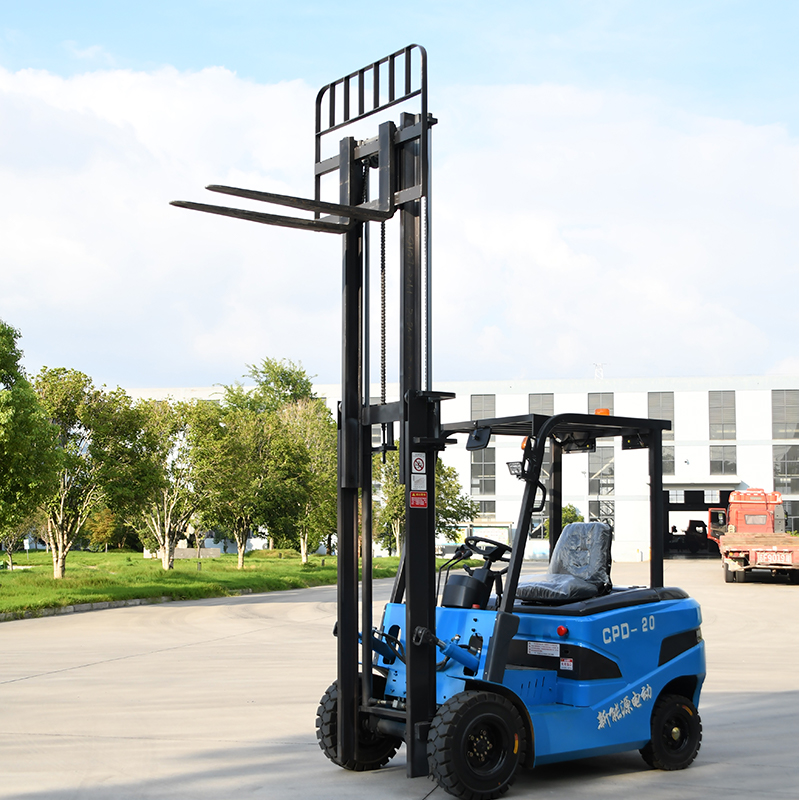
Before approving a warehouse layout, ask for a confirmed right-angle stacking aisle requirement for the exact forklift, load, and storage arrangement you intend to use. Do not approve an aisle solely because its width exceeds a published turning-radius figure.
The CPD-20 product specifications list a minimum turning radius of 2100 mm, but they do not state a right-angle stacking aisle width. Treat that missing value as an engineering confirmation item, not as permission to substitute the turning radius. For overseas importers and procurement managers, the practical task is to assemble the application details, request a configuration-specific assessment from the factory, and document the conditions behind the answer.
Start with the Published Specifications
Use the product page as the starting point for equipment identification. Keep published specifications separate from project-specific requirements, and mark any unconfirmed aisle dimension clearly in your purchasing documents.
| Published model comparison | Recommended purchasing action |
|---|---|
| The CPD-15 has a rated capacity of 1500 kg and a minimum turning radius of 1920 mm. | Request an application review before considering it as an alternative to the target model. |
| The CPD-20 has a rated capacity of 2000 kg and a minimum turning radius of 2100 mm. | Use this model as the reference for the requested stacking assessment. |
| The CPD-25 has a rated capacity of 2500 kg and a minimum turning radius of 2400 mm. | Request a separate assessment rather than reusing the CPD-20 layout approval. |
The CPD-20 specifications also list a lift height of 3000 mm, fork length of 1070 mm, fork width of 100 mm, and four wheels. Use these published details to identify the starting configuration, then ask the factory to confirm the exact configuration proposed for your order.
Do not rank the models by turning radius alone. Before shortlisting an alternative, submit the load information and stacking requirements again, and request confirmation that the proposed model is suitable for that application.
Investigate the Missing Inputs Before Approving an Aisle
Structure the analysis around unanswered questions rather than an assumed universal aisle allowance. Ask the factory to explain which application details it needs and which configuration assumptions its assessment will use.
Define the load and its orientation
Record the pallet dimensions, the overall loaded dimensions, and the intended fork-entry direction. Include photographs or sketches showing any load projection beyond the pallet. Ask the engineer to assess the submitted loaded arrangement, not an unnamed reference pallet.
Define the stacking movement
Show the intended approach direction, storage position, and withdrawal route on the layout. Ask whether the proposed assessment covers the complete handling sequence or only an isolated turning movement. Request clarification about any manoeuvring assumptions before accepting the result.
Define the available space
Mark the boundaries used for your aisle measurement. Include rack faces, protective structures, columns, walls, and any locations where stored goods may project into the proposed route. Ask the engineer which boundaries should govern the assessment.
Define the acceptance conditions
Request a clear distinction between a calculated movement envelope, a recommended operating arrangement, and the final aisle dimension proposed for your site. Do not treat an unexplained figure as a complete layout recommendation. Ask for the assumptions and limitations in writing.
Measure the Site and Prepare a Useful Layout
Prepare a dimensioned drawing before requesting a final aisle recommendation. For an existing facility, compare the drawing with site measurements instead of submitting an architectural plan without checking its current condition.
- Mark the target aisle. Identify exactly where right-angle stacking is required and show the storage positions served by that aisle.
- Record the available clear space. Measure between the physical boundaries proposed for the assessment, and label each measurement location.
- Identify local restrictions. Mark columns, rack protection, door openings, service equipment, and other objects for the engineer to review.
- Document the pallet position. Show the intended storage orientation and include any permitted projection beyond the storage face.
- Show entry and exit routes. Include the approach from the adjoining travel area and the route after retrieving a load.
- Attach photographs. Match each photograph to a marked location on the drawing so that the factory can interpret the site consistently.
Use consistent units throughout the submission. Label measurements as either site-verified or taken from drawings, and identify any dimensions still awaiting confirmation. If the facility is under construction, ask the project team to confirm the final available dimensions before signing off the forklift application.
Select the Configuration Before Requesting Final Approval
Request the aisle assessment against a named configuration rather than a general product category. Keep the model, forks, mast selection, load description, and intended stacking position together in the same enquiry.
Confirm the fork arrangement
The CPD-20 product page lists extended fork lengths of 1520, 1670, and 1820 mm. If you intend to order extended forks, state the selected length explicitly and ask the engineer to assess that arrangement.
Do not submit the published fork length for the layout review while requesting a different fork length in the purchase specification. Ask for confirmation of fork suitability for your pallet and load, including the intended insertion arrangement. Keep any proposed attachment or handling accessory visible in the enquiry rather than adding it after the assessment.
Confirm the stacking height and mast selection
The CPD-20 product page lists three-stage mast lift-height options of 4.5, 4.8, 5, 5.2, and 6 m. Identify the required storage position and ask the factory to confirm the proposed mast configuration against the complete application.
Request confirmation of suitability at the intended working height rather than relying only on the rated-capacity figure. Submit the actual load description and ask for clarification of any restrictions relevant to the proposed arrangement.
Keep unrelated decisions separate
Discuss operating schedules and charging requirements in the wider equipment enquiry, but do not accept them as substitutes for aisle confirmation. Maintain a separate, clearly labelled approval item for right-angle stacking.
Follow a Configuration-Specific Verification Process
Use a staged review so that a preliminary discussion does not become an accidental layout approval. Ask the factory to identify the status of each response and to list any information still needed.
- Submit the application package. Send the dimensioned layout, load information, photographs, required stacking height, and proposed CPD-20 configuration together.
- Request the assessment basis. Ask which truck dimensions, load assumptions, movement sequence, and clearance criteria are being used.
- Request a documented result. Ask for the proposed aisle requirement and the associated conditions, preferably illustrated on the submitted layout.
- Resolve exceptions. Review any location that has not been accepted, and ask whether a configuration change or layout revision should be investigated.
- Agree the verification method. Ask whether a configuration drawing, movement assessment, practical trial, or another agreed method is appropriate before final acceptance.
- Control later changes. Request another review if the approved load, forks, storage arrangement, or site dimensions are changed.
Where a practical trial is proposed, ask the responsible site team and factory engineer to agree the procedure beforehand. Record the configuration and test conditions, and avoid treating an informal demonstration as approval for every operating situation.
Use This Procurement Checklist Before Releasing the Order
Turn the aisle review into a purchasing checkpoint. Assign responsibility for each item and keep unresolved questions open until the relevant party provides written confirmation.
- Model identification: Does the assessment name the CPD-20 and the configuration proposed for supply?
- Load information: Have pallet dimensions, overall loaded dimensions, weight, and fork-entry orientation been submitted?
- Fork selection: Does the assessment use the fork length requested in the order?
- Stacking requirements: Have the intended storage height and pallet position been reviewed?
- Site measurements: Have the available dimensions been checked against the current site or final construction drawings?
- Obstructions: Have rack protection, columns, walls, and other restrictions been marked for review?
- Movement scope: Does the review cover approach, placement, withdrawal, and departure?
- Assessment conditions: Are the assumptions, limitations, and proposed clearance criteria documented?
- Acceptance evidence: Have you agreed what documentation or verification is required before approval?
- Change control: Is another review required if the configuration or application changes?
For purchases covering several facilities, complete the checklist for each intended application. Do not copy an approval from another warehouse without asking the factory to review the new layout and load details.
Avoid Common Aisle-Planning Mistakes
Substituting turning radius for aisle width
Do not enter the published minimum turning radius into the aisle-width field of a warehouse specification. Keep those fields separate and leave the required stacking aisle marked as unconfirmed until the application review is complete.
Using fork length as a stand-in for load dimensions
Submit both the selected fork length and the actual loaded dimensions. Ask the engineer to confirm the handling arrangement rather than assuming that a fork measurement adequately describes the pallet or its contents.
Assessing only the empty truck
Request a review of the intended loaded stacking operation. If an illustration or demonstration shows only an unloaded manoeuvre, ask for clarification before treating it as evidence for your application.
Leaving obstacles outside the drawing
Check the site submission for protective structures and local restrictions before sending it. Where a drawing appears clear but a photograph shows an obstruction, resolve the discrepancy and provide an updated measurement.
Changing the configuration after approval
Do not carry forward an earlier assessment without review after changing forks, mast selection, load arrangement, or storage layout. Ask the factory which changes require renewed confirmation and record the response with the order.
Accepting an aisle figure without its conditions
Request the basis of the recommendation, not just the final dimension. Ask what was assessed, what remains unverified, and what conditions must be maintained for the proposed arrangement.
Make the Enquiry Specific Enough to Assess
Use a structured enquiry to obtain a useful technical response. Instead of asking only whether the forklift will fit, ask the factory to review a defined operation in a defined space.
For example: Please assess the proposed CPD-20 configuration for right-angle stacking in the attached layout. Review the attached pallet and loaded dimensions, fork-entry direction, required storage height, selected forks, and marked obstructions. Confirm the recommended aisle requirement, the assessment assumptions, and any additional information or verification needed before approval.
Ask the purchasing team to retain the drawing revision, configuration description, and factory response together. Before releasing the order, compare the final equipment specification with the configuration named in that response and resolve any differences.
Summary: Confirm the Application, Not Just the Turning Radius
For a defensible purchasing decision, use the published CPD-20 specifications to identify the truck, then request a separate right-angle stacking assessment for your actual application. Avoid inventing a universal aisle figure or approving a layout from the turning radius alone. Measure the available space, define the loaded arrangement, agree the configuration, and obtain written confirmation of the assessment conditions.
Welcome to submit your requirements through the enquiry form on our website. Include your warehouse layout, pallet and load details, available aisle dimensions, and required stacking height; our factory engineers will review the configuration against your intended operating scenario and clarify the information needed for selection.
Related equipment
Turn this guide into a purchasing checklist
| Information to provide | Evidence to request |
|---|---|
| Loaded pallet width and length, overhang and stacking route | Request Ast data for the selected truck and the same pallet orientation |
| Doorways, clear aisle width, turning area and floor conditions | Confirm clearances with the supplier; turning radius alone does not establish stacking aisle width |